Uniform particle distribution
Uniform particles mean maximal bioavailability and precise dosing.
Why it matters → only a 1–5 µm aerosol reaches the deep lung.
Technology
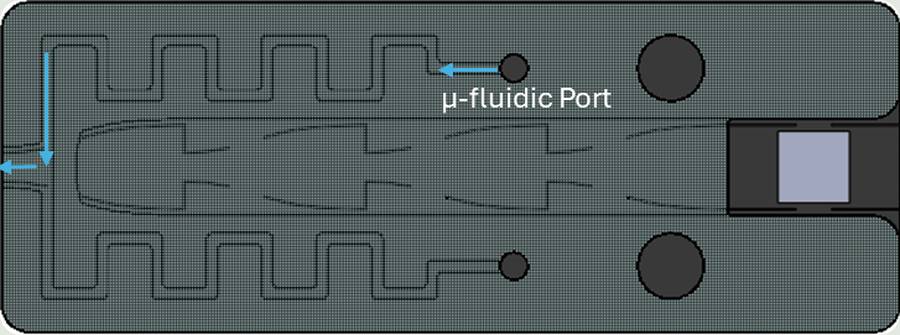
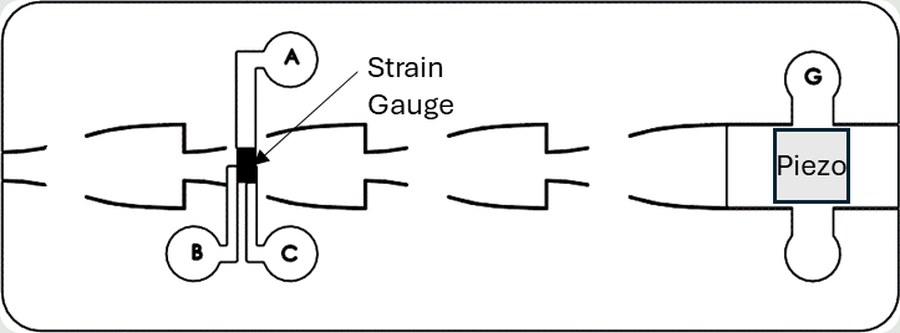
The MEMS nebulizer amplifies small piezo vibrations, so liquid at the tip vibrates and pinches off into a uniform, gentle aerosol.
01The platform
Uniform particles mean maximal bioavailability and precise dosing.
Why it matters → only a 1–5 µm aerosol reaches the deep lung.
Faraday-wave atomization ought to be gentler than incumbents.
Why it matters → fragile payloads such as lipid-nanoparticle capsules and mAbs survive.
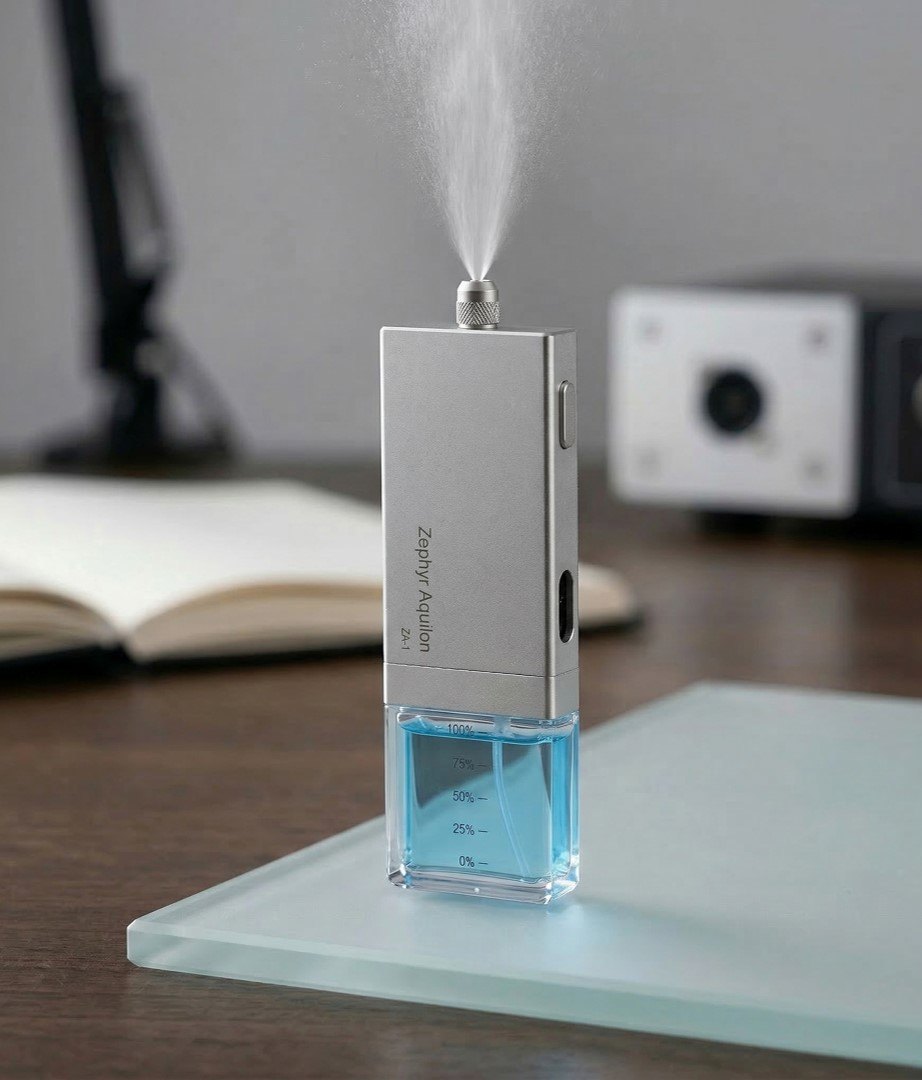
A minimalist, finger-sized device that fits discreetly in the pocket.
Why it matters → convenience is exactly what the dry-powder inhaler fails to deliver; Afrezza is the cautionary example.
02Why particle size matters
A tight droplet distribution is necessary to ensure:
03Why low shear matters
LNPs made RNA medicines possible, but the capsule does not survive conventional nebulization. Published work reports particle growth, aggregation and cargo loss from shear and interfacial stress (Wiebe 2026, Heiser 2025). Integrity largely holds below an energy-dissipation threshold of roughly 5–10 J/g (van Rijn 2023).
Solving inhaled biologics starts with the device.
04Built so far
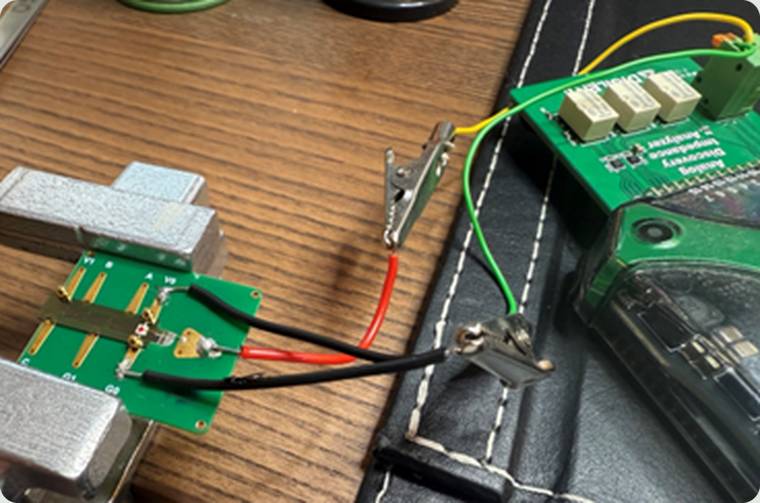
Phase 1 is proof of concept and IP.
1 patent filed (October 2025, European Patent Office), covering the resonance-tracking method alongside the device design, fabrication, electronic controls and microfluidics.
Product vision
A handheld inhaler with a snap-in cartridge, paired with a companion app that guides the patient from prescription to first dose.


05Competition
We benchmark against vibrating mesh because it is the standard way to turn a liquid into a breathable aerosol. Mesh devices from Pari, Aerogen, Omron and Philips are good products, approved at scale. But they push liquid through holes and keep making the holes better.
Besides being bulky, the vibrating-mesh nebulizer shears proteins hard enough to unfold and aggregate them, and a damaged dose provokes an immune response rather than merely underperforming (Lundahl 2021).
Dry powder is the other serious platform: expedient for pharma, but the complexity lands on users. Afrezza, a dry-powder insulin inhaler, was approved and proved a systemic biologic could be delivered through the lung; yet it never translated into market success.
Next